


Beyond "Smooth": 5 Hand-Burnished Texture Profiles Trending for Spring 2026

Flat walls had their moment. Spring 2026 is all about dimension, movement, and surfaces that demand a second look. Forget the cookie-cutter knockdown or generic orange peel: this season, Vancouver homeowners are gravitating toward hand-burnished textures that transform basement suites, home offices, and living spaces into architectural statements.
These aren't mass-produced finishes. Each profile requires specialized trowel work, precise layering, and an understanding of how light interacts with surface depth. The result? Walls and ceilings that feel intentional, luxurious, and unmistakably custom.
Discover the five hand-burnished texture profiles defining premium interiors this spring: and see why the right finish elevates your renovation from "done" to "designed."
Why Hand-Burnished Textures Are Dominating 2026
Hand-burnishing compresses and polishes plaster or microcement surfaces using specialized steel trowels, creating finishes that range from soft matte to subtle sheen. Unlike machine-applied coatings, each pass of the trowel introduces natural variation: think subtle striations, tonal shifts, and organic movement that catches light differently throughout the day.
This technique rewards patience and precision. The outcome is a surface with character, depth, and a tactile quality that flat paint simply cannot replicate.
For basement suite renovations and home office builds, hand-burnished walls add perceived value and sophistication without reducing square footage or requiring elaborate trim work. The texture itself becomes the design feature.
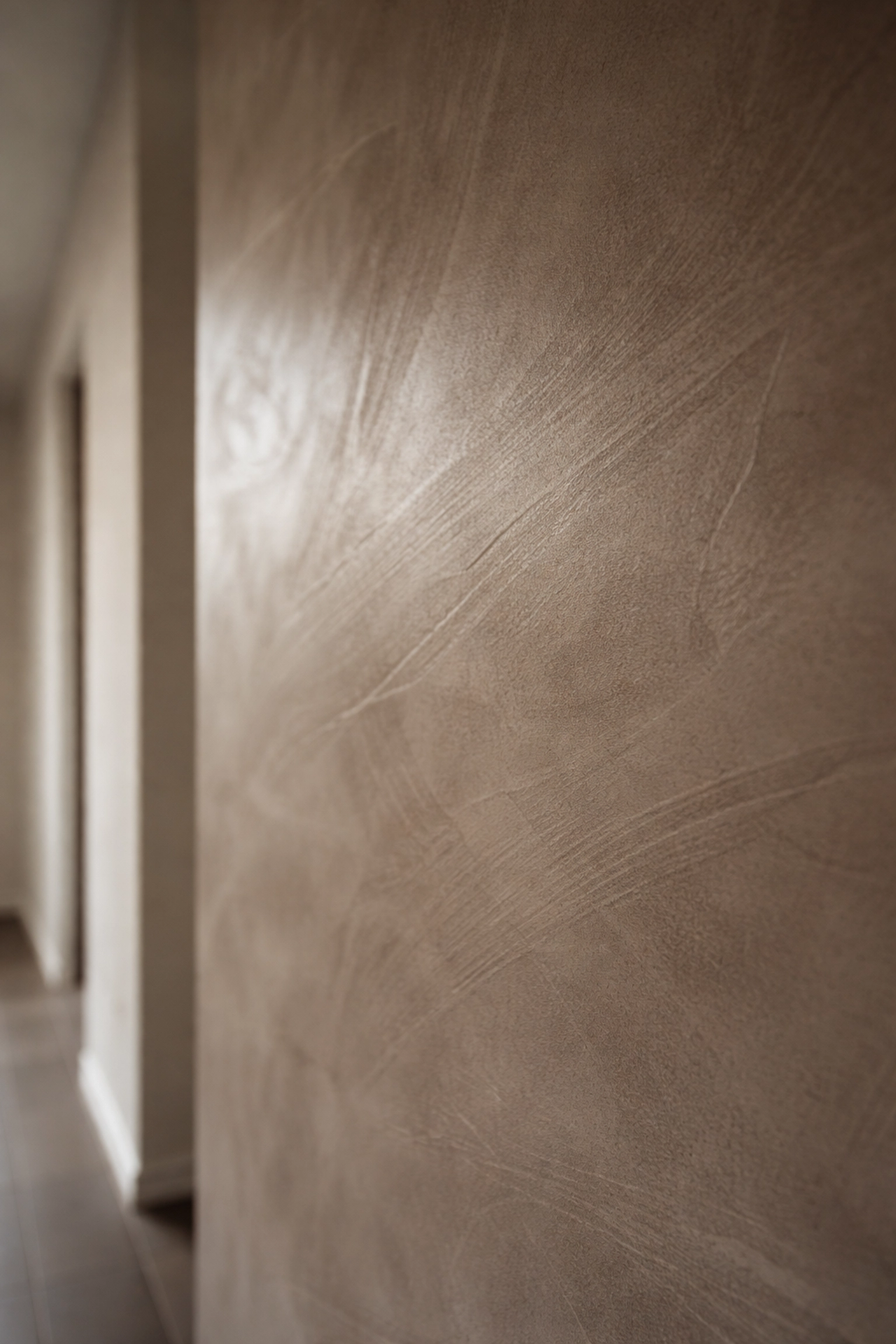
1. Soft Suede Burnish
The Look: Imagine running your hand across fine Italian suede: velvety, warm, and impossibly smooth with just enough grain to hold the light.
The Technique: Achieve this profile by applying thin microcement layers with a flexible stainless trowel, then burnishing at a low angle while the material is still workable. The compression creates a matte finish with microscopic texture variation that mimics natural suede.
Best For: Home offices and basement suite bedrooms where you want warmth without busy patterns. Soft suede walls absorb harsh overhead light and create a cocooning effect that's ideal for focus or rest.
Lighting Tip: Pair with indirect LED cove lighting positioned at ceiling height. The angled light grazes the surface, revealing the subtle grain without creating harsh shadows.
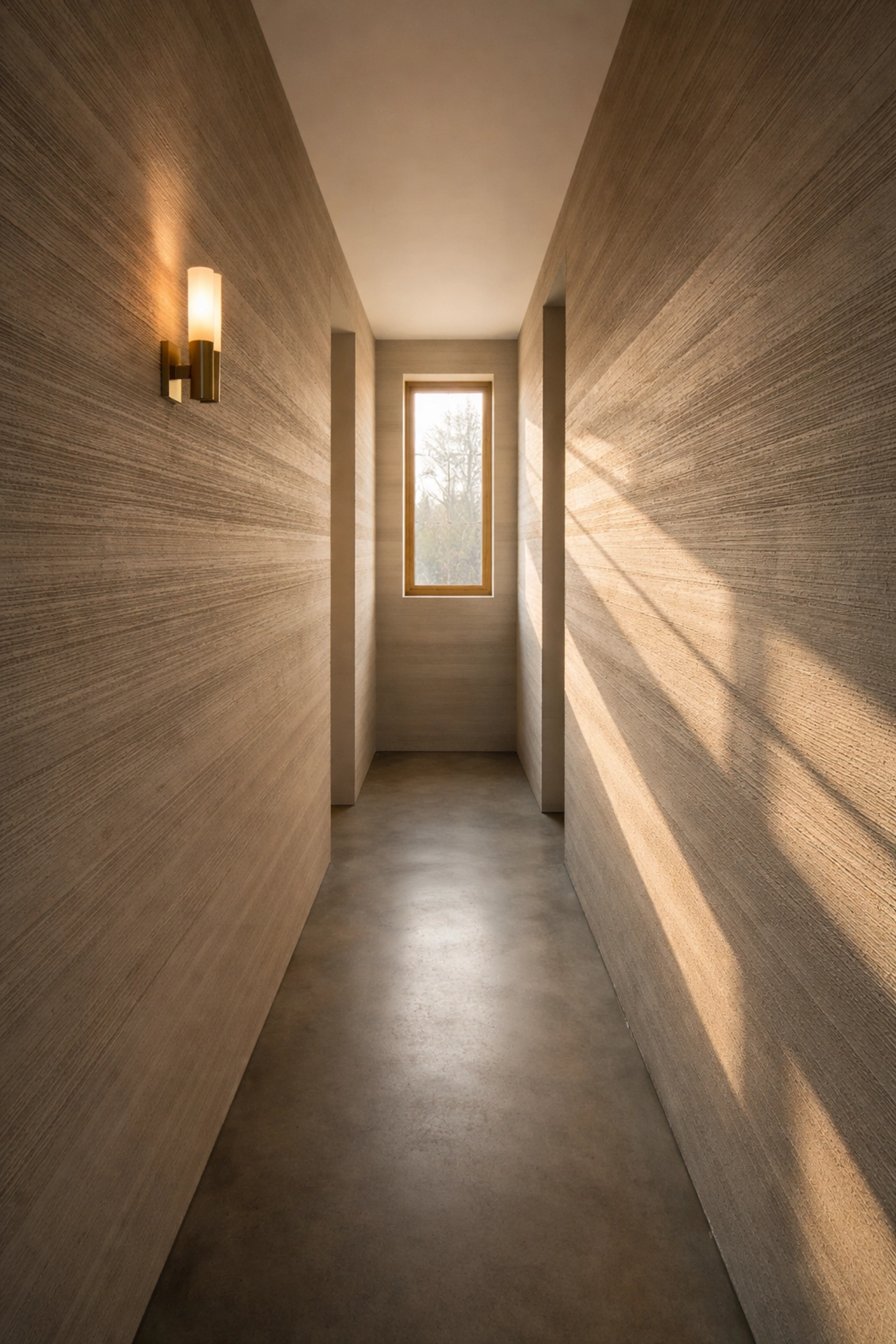
2. Directional Brushed Plaster
The Look: Linear, flowing movement across the wall: like windswept sand dunes frozen in plaster. This profile adds horizontal or vertical rhythm that elongates spaces and draws the eye.
The Technique: Apply a base coat of lime or gypsum plaster, then use a wide, flat trowel in consistent directional strokes before burnishing. The key is maintaining stroke uniformity while allowing natural hand variation to prevent a mechanical appearance.
Best For: Narrow hallways, galley-style basement suites, or feature walls in open-concept home offices. The directional lines create visual expansion and guide movement through a space.
Lighting Tip: Install track lighting or adjustable wall washers perpendicular to the stroke direction. Cross-lighting dramatizes the texture and creates shadow lines that shift as the sun moves.
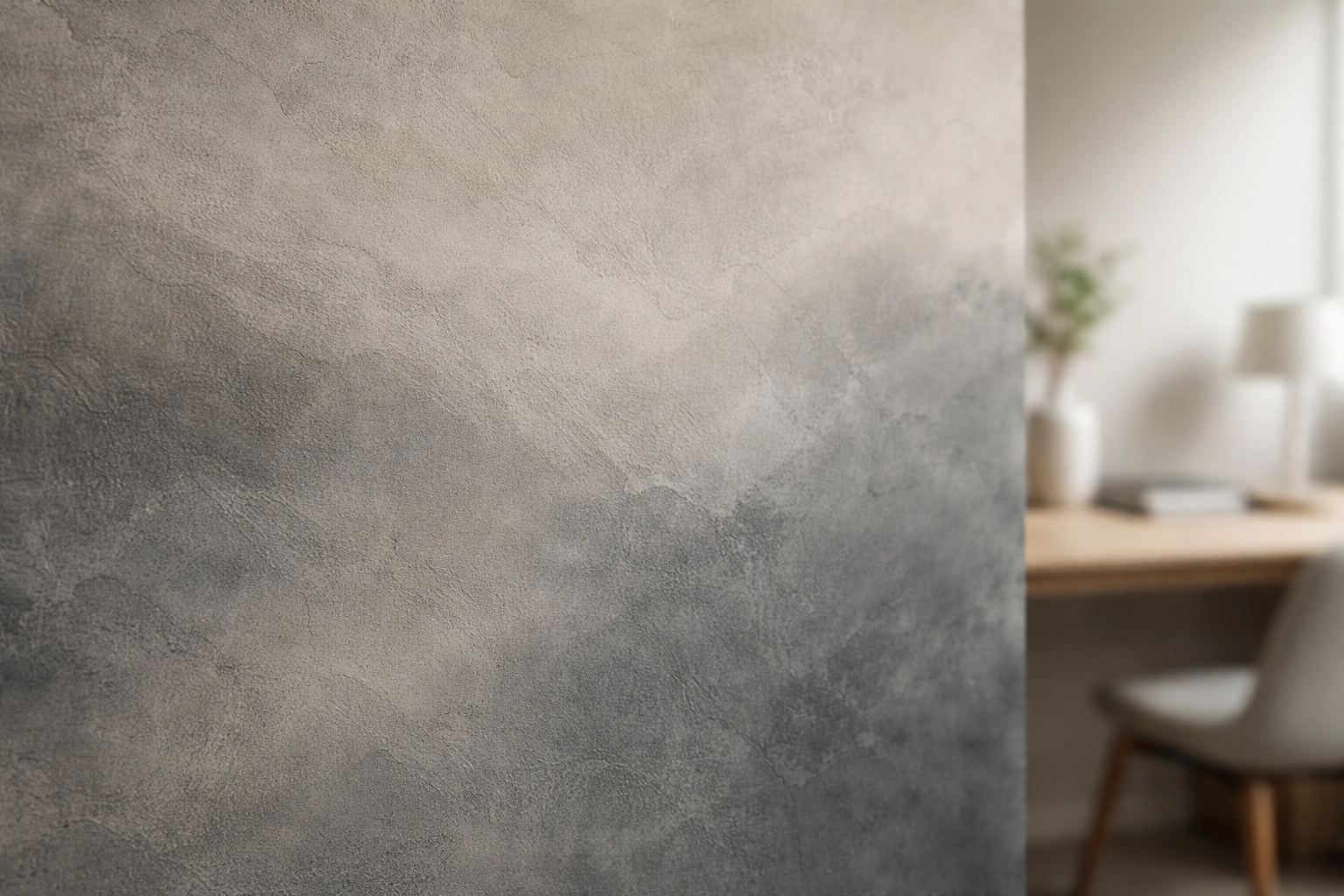
3. Chalky Two-Tone Matte
The Look: A sophisticated blend of two closely related hues: think warm grey layered over cool charcoal, or soft cream over muted sand. The effect is subtle, almost watercolor-like, with organic transitions between tones.
The Technique: Layer two pigmented plaster coats, allowing partial cure between applications. During the final burnish, variations in pressure reveal glimpses of the base tone beneath the top coat. This demands precise timing and a keen eye for balance.
Best For: Statement walls in basement suite living areas or executive home offices. The tonal variation adds visual interest without overwhelming artwork or furnishings.
Lighting Tip: Use warm-white pendants or floor lamps positioned at varying heights. Multiple light sources at different angles reveal new color relationships throughout the day, keeping the wall dynamic.
4. Micro-Grain Venetian
The Look: The classic Venetian plaster aesthetic: refined, polished, and timelessly elegant: updated with a finer grain structure for 2026. Expect a soft sheen with crystalline depth that feels luminous rather than glossy.
The Technique: Build multiple ultra-thin layers of marble-powder plaster, burnishing each layer with increasing pressure. The final pass uses a polished steel trowel heated slightly to compress the surface and develop natural sheen from the calcium content.
Best For: Formal areas, powder rooms within basement suites, or home office reception spaces where you want understated luxury. Micro-grain Venetian reads as high-end without shouting.
Lighting Tip: Recessed downlights with a narrow beam angle work beautifully here. Position them close to the wall to create dramatic gradients that highlight the plaster's natural luminosity.
5. Soft Crumpled Linen
The Look: Organic, relaxed, and reminiscent of crushed natural fabric. This profile features soft undulations and compressed folds that add dimension without sharp edges or aggressive patterns.
The Technique: Apply a thick base coat and manipulate it with bunched fabric or specialized texture rollers before it sets. Once partially cured, burnish the high points with a rounded trowel edge, leaving valleys slightly matte and peaks with subtle sheen.
Best For: Creative home offices, meditation spaces, or basement suite accent walls where you want texture that feels artisanal and calming rather than industrial.
Lighting Tip: Embrace natural light for this profile. Position near windows where raking daylight can move across the surface. Supplement with dimmable wall sconces for evening ambiance.
The Lighting Factor: Why It Makes or Breaks Your Texture
Hand-burnished textures live and breathe through light. The same wall can appear flat under diffused overhead fluorescents and spectacularly dimensional under properly positioned accent lighting.
Consider these principles when planning your renovation:
Raking light (positioned at a sharp angle to the wall) emphasizes texture depth and reveals subtle variations
Wash lighting (broader, softer coverage) smooths out imperfections and creates even tone
Warm colour temperatures (2700K–3000K) enhance earth-toned plasters and suede finishes
Cool colour temperatures (4000K+) work better with grey, blue, or charcoal pigmented surfaces
Discuss lighting placement with your finishing team before installation. The texture application can be adjusted based on your lighting plan to maximize the visual effect.
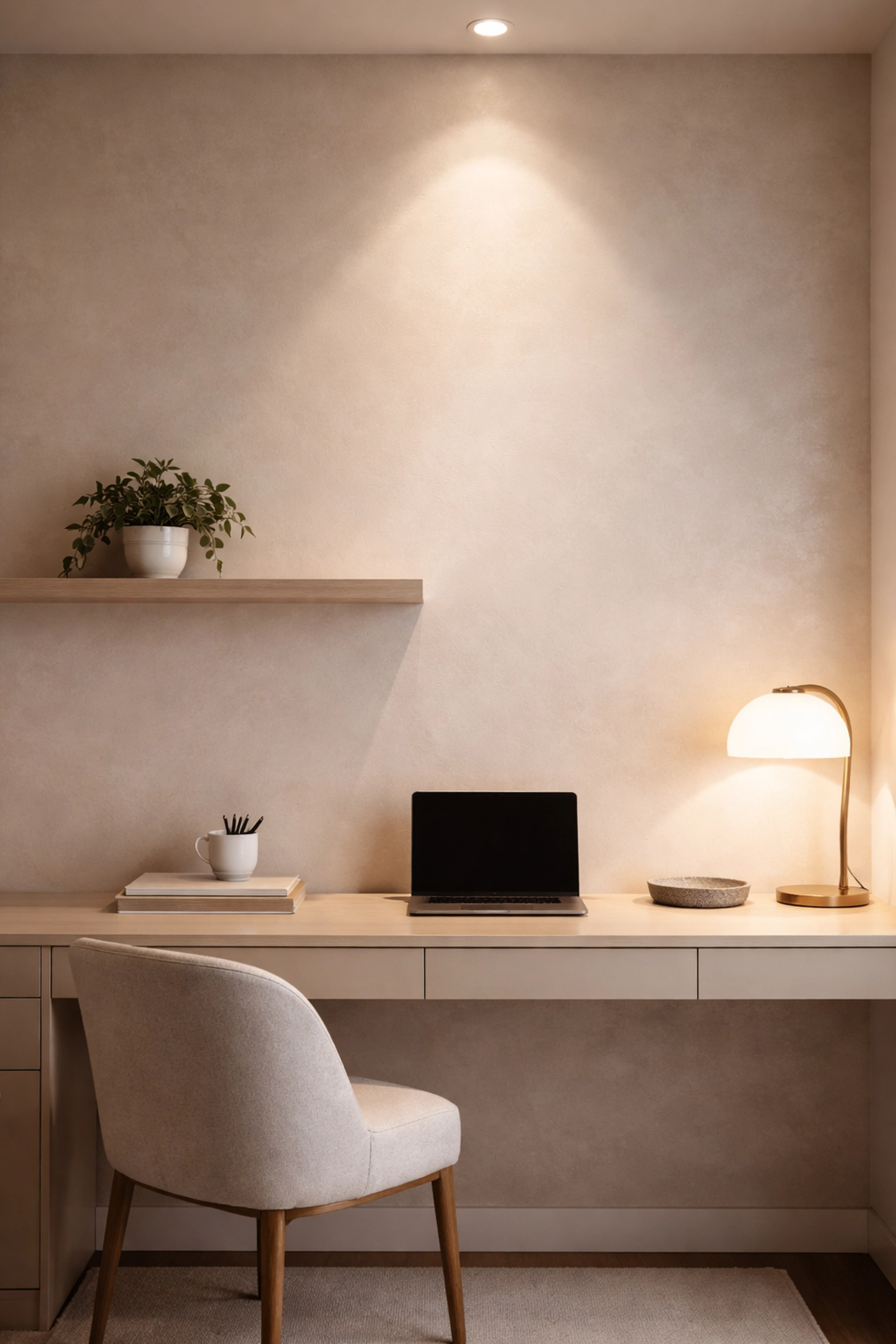
Elevate Your Basement Suite or Home Office This Spring
These five profiles represent the leading edge of interior finishing for 2026: surfaces that reward close inspection, respond to natural light cycles, and transform functional spaces into design destinations.
Whether you're converting a basement into a rental suite, building a dedicated home office, or simply ready to move beyond flat painted drywall, hand-burnished textures deliver lasting impact.
Ready to see these finishes in person? Explore our portfolio for completed projects featuring custom texture work, or book a consultation to discuss which profile suits your space, lighting, and vision.
Spring is the season of transformation. Start yours with walls that actually say something.
Comments